
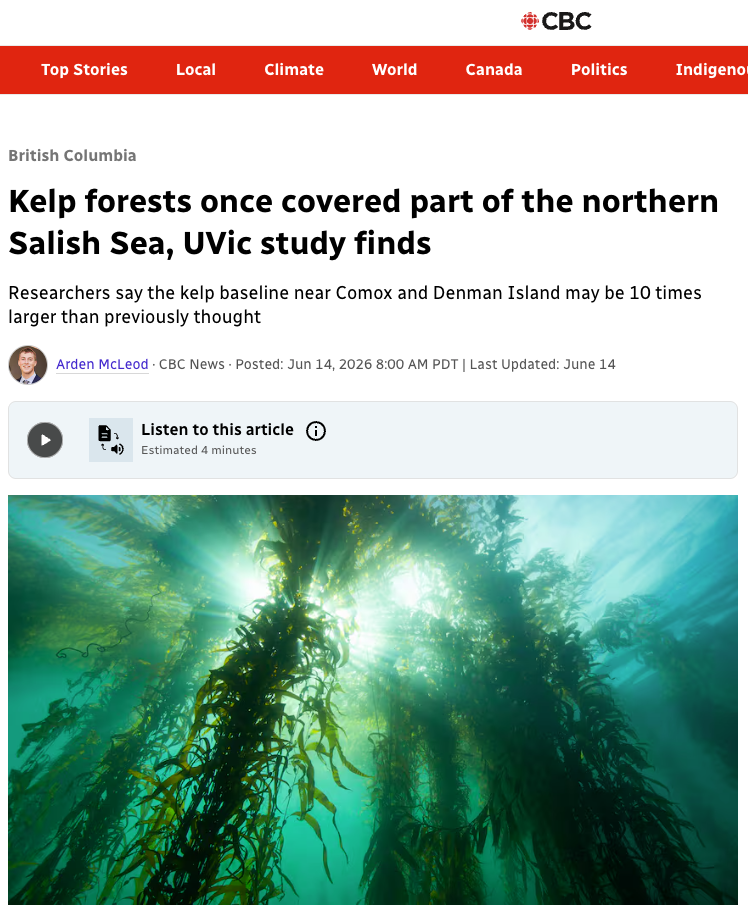
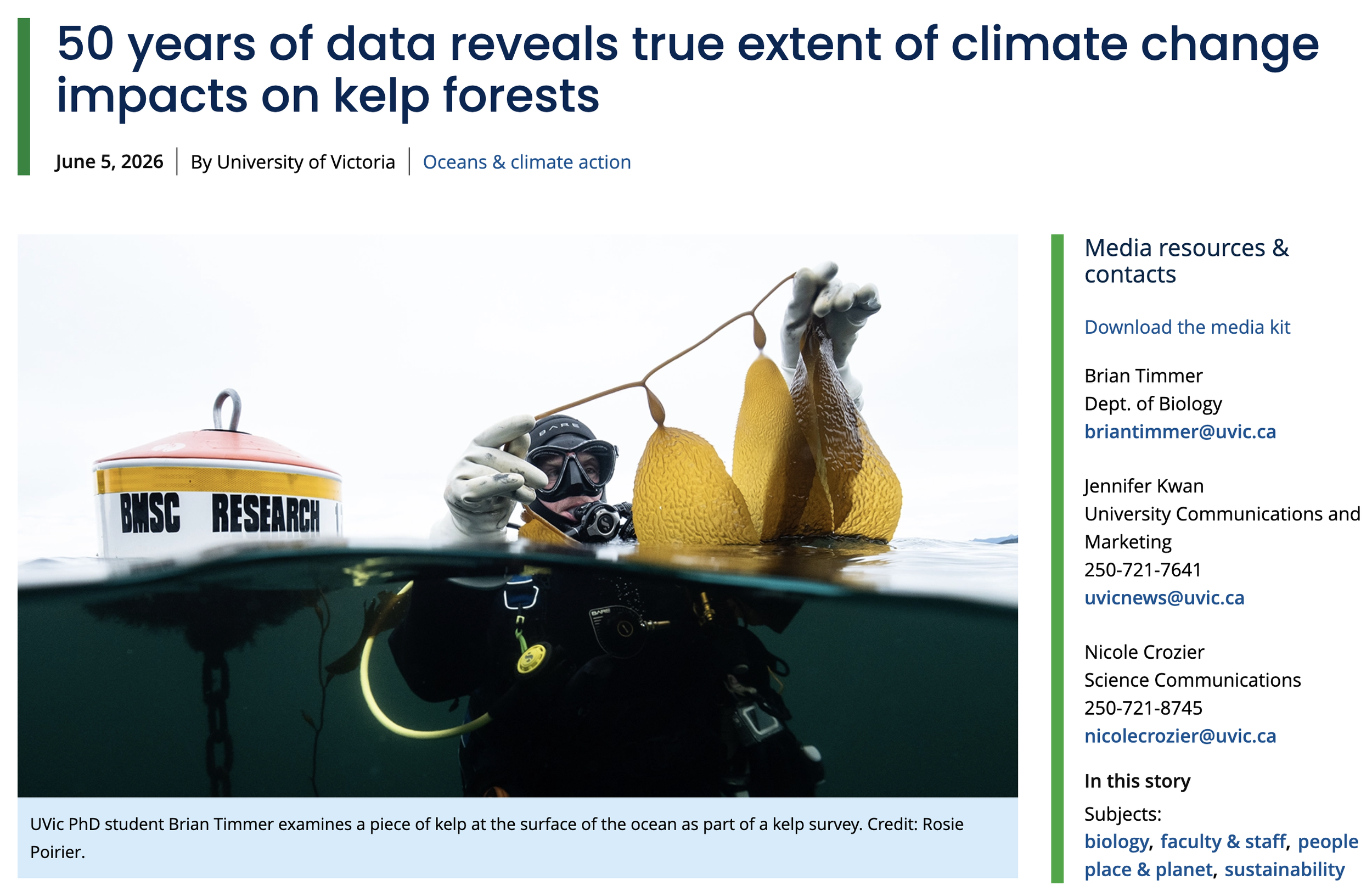
Using old maps, aerial photos, and data dating back to 1972, PhD student Brian Timmer was able to show that kelp forests started disappearing as soon as the 80’s within the Northern Salish Sea. This is well before climate change and heatwaves drew attention to the loss of kelp forests around BC. Overall, the data shows that there used to be 550 hectares of floating bull kelp in the study area, all of which have disappeared. You can check out the paper here and the news coverage below.
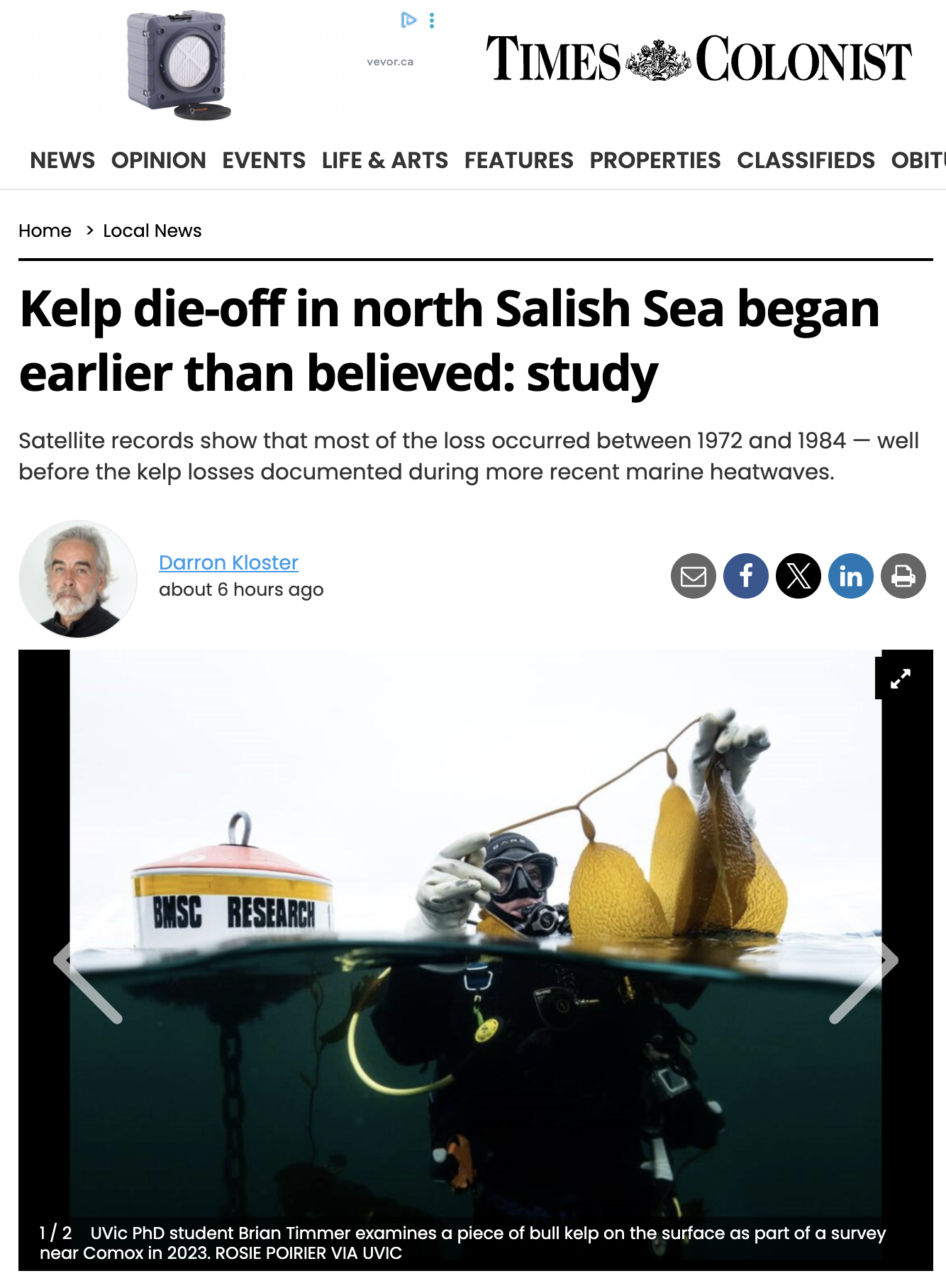
Coverage in the Times Colonist, Jun 2026 - PDF
Interview with Jason D’Souza on All Points West CBC, Jun 2026
Interview with Ryan and Lisa on CFAX 1070, Jun 2026
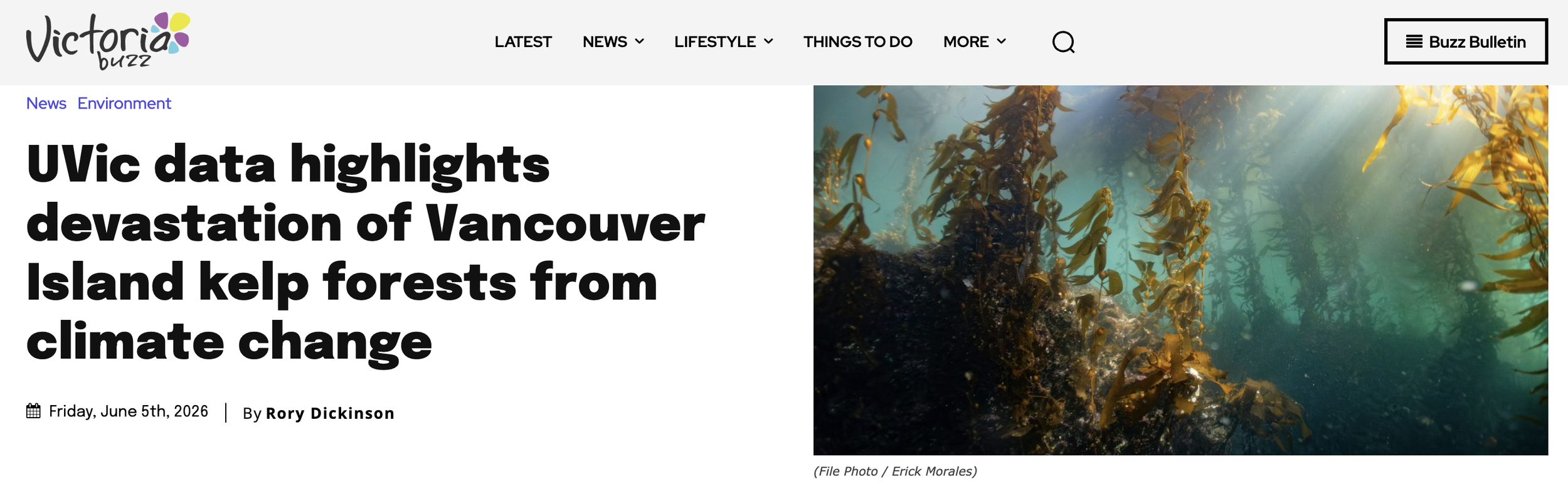
Coverage in Victoria Buzz, Jun 2026 - PDF
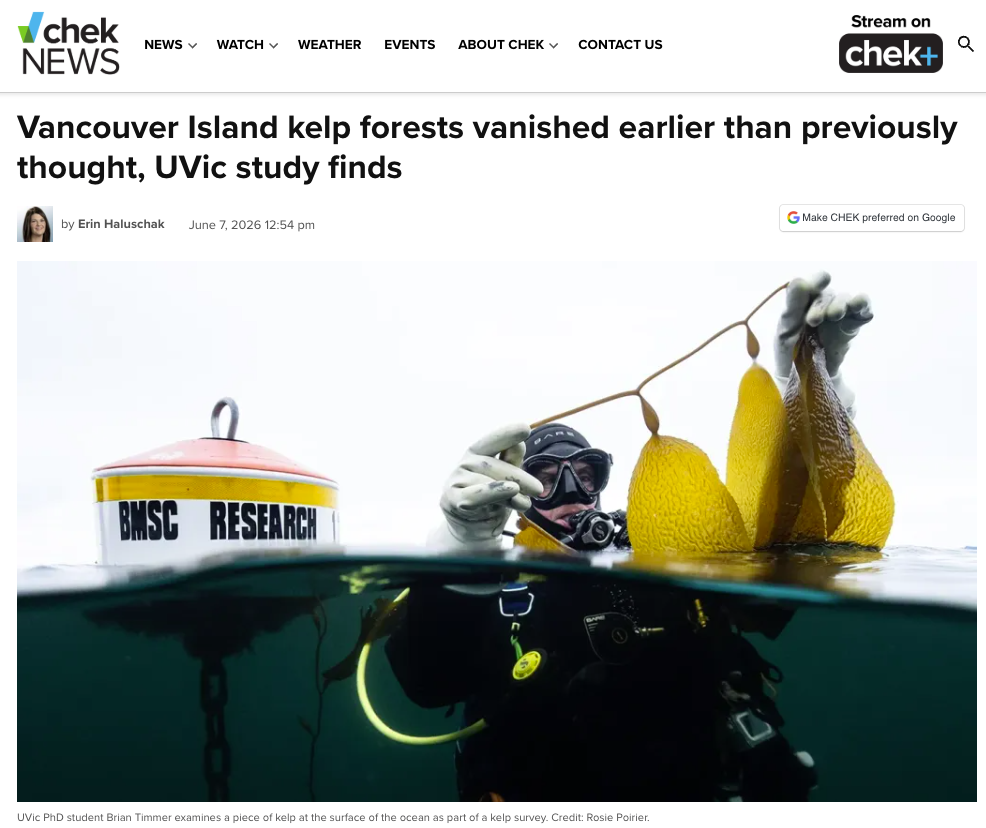
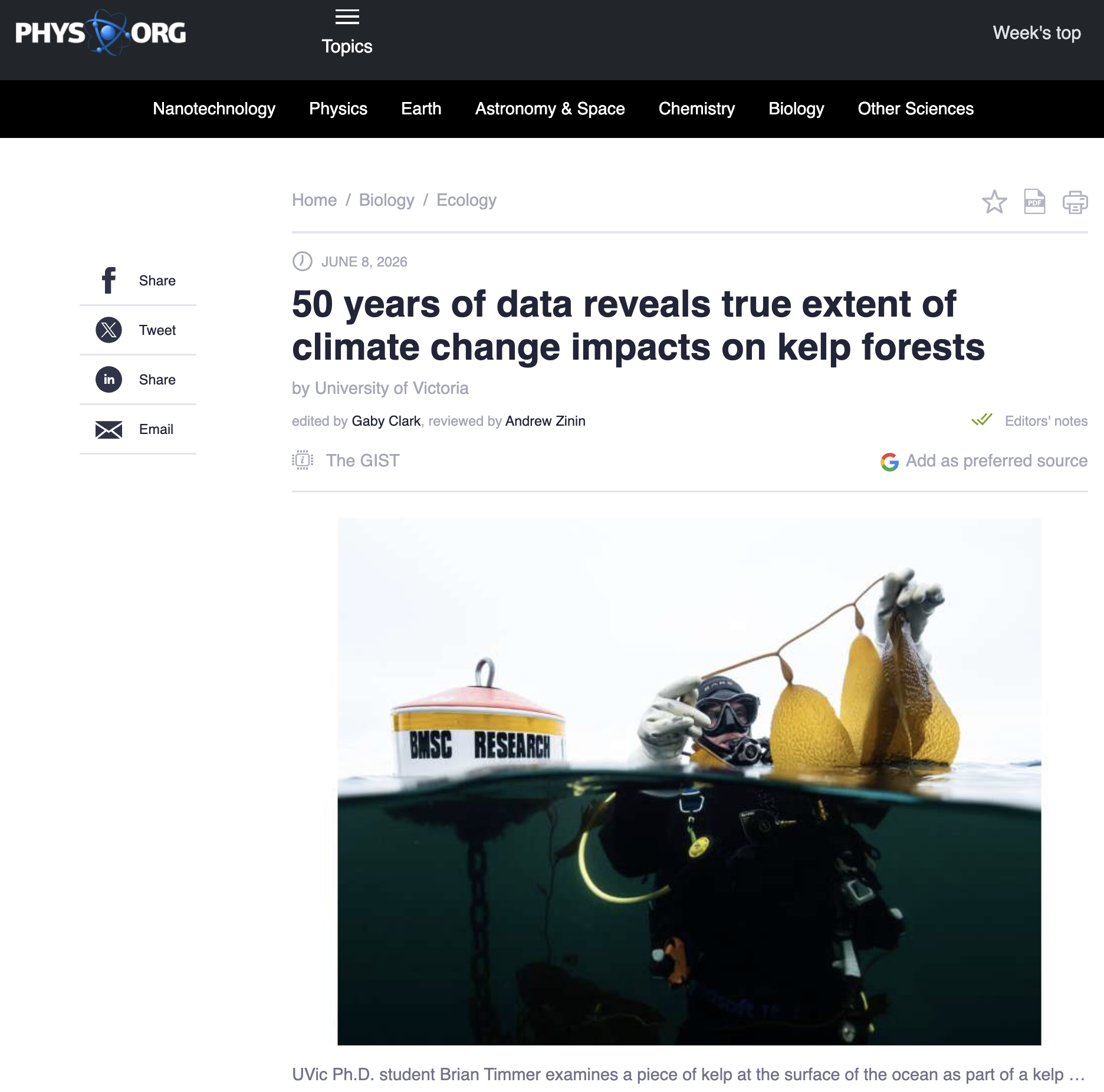
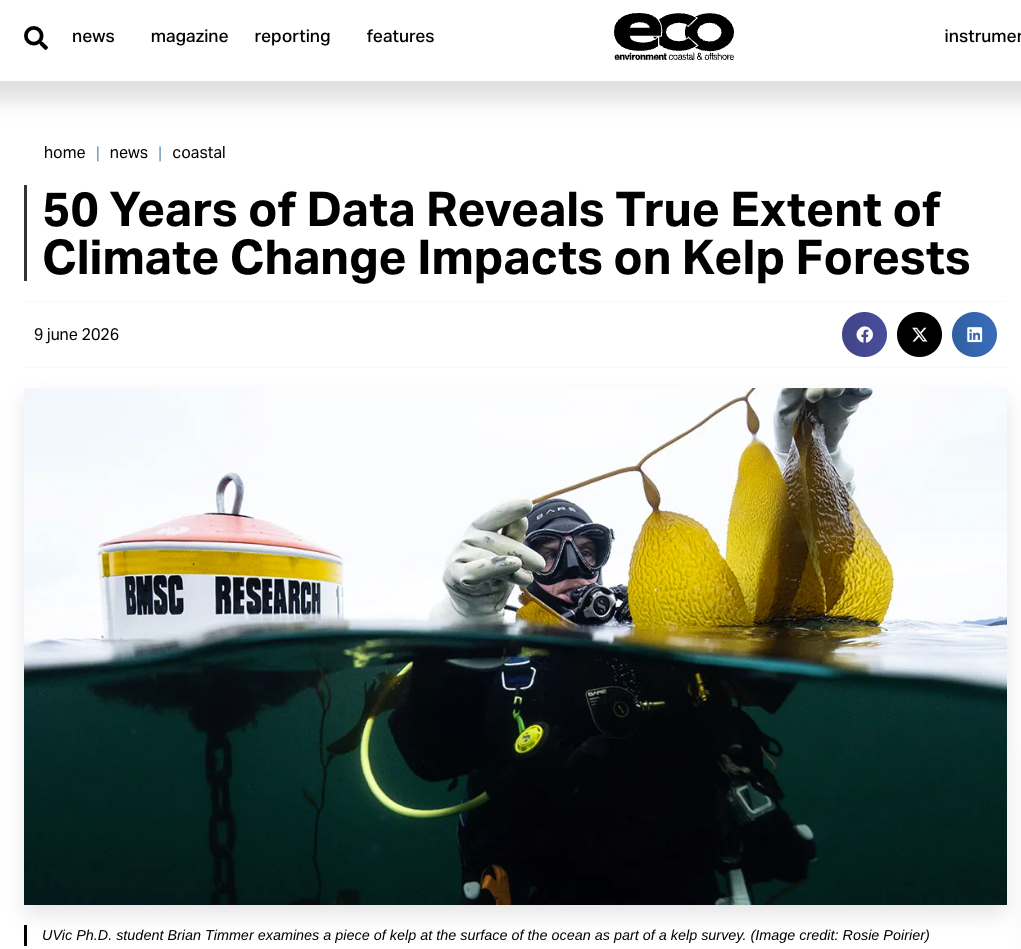
Coverage in ECO magazine online, Jun 2026 - PDF
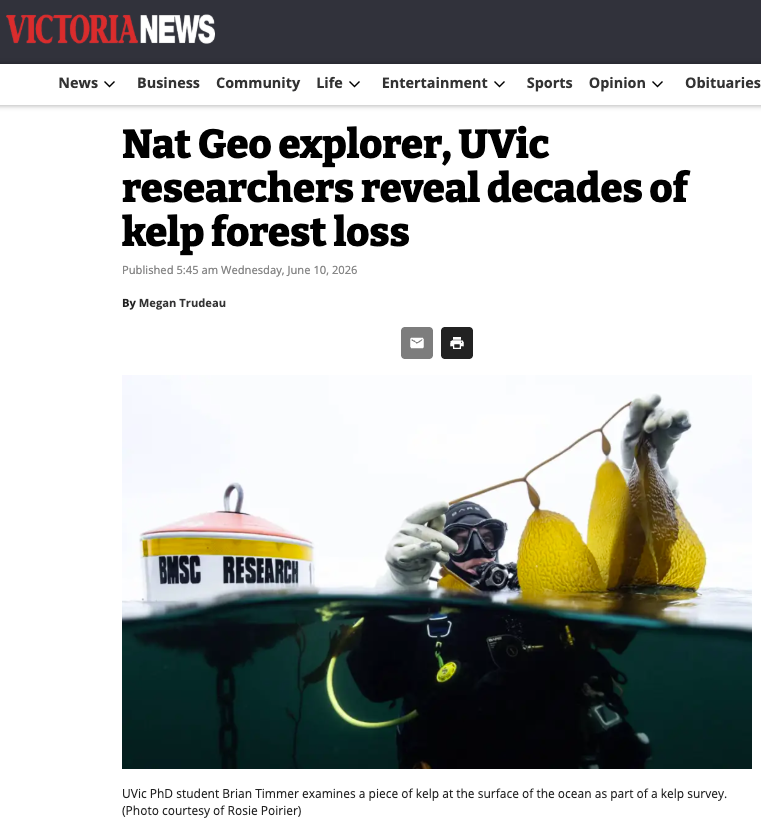
Coverage in Victoria News, Jun 2026 - PDF
This article also appeared in Oak Bay News and Vancouver Island Free Daily
UVic’s press release, Jun 2026
The warm water came back summer 2023…. The waters around BC were ~4C hotter than normal. We worked to document the impacts this will have. Check out the article about this marine heat wave in the Times Colonist (PDF). The article was reprinted in the Vancouver Sun. Julia also spoke to 1040FM CFAX morning show about the effects of the marine heatwave on our coastal ocean life and Brian was interviewed on CBC.
One of the previous times we had a marine heat wave in BC waters led to kelp populations on the west coast of Vancouver Island decreasing by 40% during ‘The Blob’. However, the kelp that survived may hold the key to helping kelp forests in the future.
Working in collaboration with Kelp Rescue, research led by post-doc Sam Starko found that 40% of kelp vanished on the west coast of Vancouver Island due to ‘The Blob’, a marine heat wave that started in 2014. The research found that environmental variations on a small scale (few kilometers or less) could be enough to protect kelp from heat stress. But it also found that although deeper waters stayed cooler, the heat from the blob aggravated sea star wasting disease which allowed a boom in the urchin population, putting further pressure on the kelp forests. This reduced in the capacity for these cool microclimates to serve as refugia from the marine heatwave.
Read more about this study here: Ecological Applications
This research was covered by the Canada National Observer.
Following up on the above study, Starko and the co-authors used data back to 1994 to track long term changes in the kelp communities along the British Columbia coastline. They found declines in the kelp community in many places across BC but that local factors can influence this in various ways.
Read more about this study here: Marine Ecology Progress Series
The authors wrote a popular science article in The Conversation covering this work. PDF

Photo Credit: Goya Page